
Thanksgiving was always my favorite holiday. My family of origin celebrated three birthdays and one wedding anniversary during November, so it was a busy month. Yet I enjoyed Thanksgiving – yes, even more than Christmas – because it was a time for the family to be together without singling anyone out for special treatment and without the extra glitz and pressure of gift-buying.
 We all came to the table as honored guests. The food was delicious. The conversation was animated and easy. I especially liked it if someone pulled out a photo album or the slide projector so we could remember our shared stories with raucous laughter intermixed with a few tinges of sadness.
Looking back, I realize what I loved about Thanksgiving was the connection I felt with my family members. Looking back, I also realize those people and connections were flawed and sometimes strained, somehow making them more meaningful.
This Thanksgiving as we gather with friends, family and strangers around tables of bounty, let us appreciate the messiness as well. In that I mean both the messiness of personal relationships as well our relationship with the history of the event itself and its meaning for Native Americans, people of color and other marginalized people.
In recent years I’ve heard many people advise staying away from religion and politics at family gatherings for fear of disagreement and angry exchanges. The logic goes something like “our friends and family are not aligned along political party lines so it’s best to let things remain unsaid.”
In contrast, I’ve also heard a few wise souls lift the importance of so-called “purple spaces” and the ability to have respectful, heart-level conversation in those places. To acknowledge the harm alongside the comfort with truth and grace. There are people and churches across the Synod who seek to embody that sort of ethic. For them I am grateful. For those people and churches who are deeply afraid of that sort of engagement, I am hopeful.
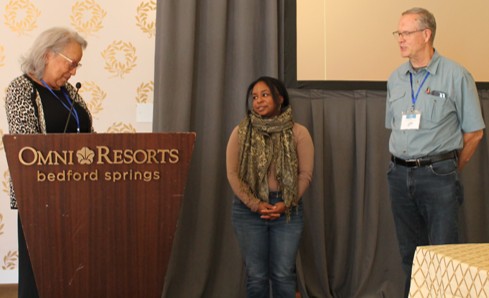
Destini Hodges-Sackey (center) and Mark Juengel (right) are installed as Synod co-moderators for 2027 by Susan Nesti.
At the recent installation of our 2027 Synod Co-Moderators, the familiar words of the Apostle Paul were read:
As many of you as were baptized into Christ
have clothed yourselves with Christ.
There is no longer Jew or Greek;
there is no longer slave or free;
there is no longer male and female;
for all of you are one in Christ Jesus.
Galatians 3:27-28
My hope for us as a Church is grounded in those verses (especially when one considers the way Chapter 3 begins with “You foolish Galatians! Who has bewitched you?”). Those verses never fail to evoke a sense of awe in me. No matter the lineage, personal experience, political leanings, foolishness and unhealthy ways of coping, we are all one in Christ Jesus. Christ who is the host, the bread and the hunger that brings us to the table. Christ whose peace passes understanding. Christ the Eternal Word who became flesh and dwelled among us.
That was on full display at the recent Synod Assembly as commissioners and leaders from all over the Synod gathered together to share their joys, concerns and wonderings. I am filled with gratitude when I consider how the Spirit brings together all of our disparate ways of being and doing into a whole. Insiders and outsiders, oppressed and privileged – we all gather at Christ’s invitation to serve as one body.
Blessings to you all as you celebrate this holiday with deep gratitude.
Kristal Smith
Stated Clerk | Synod of the Trinity
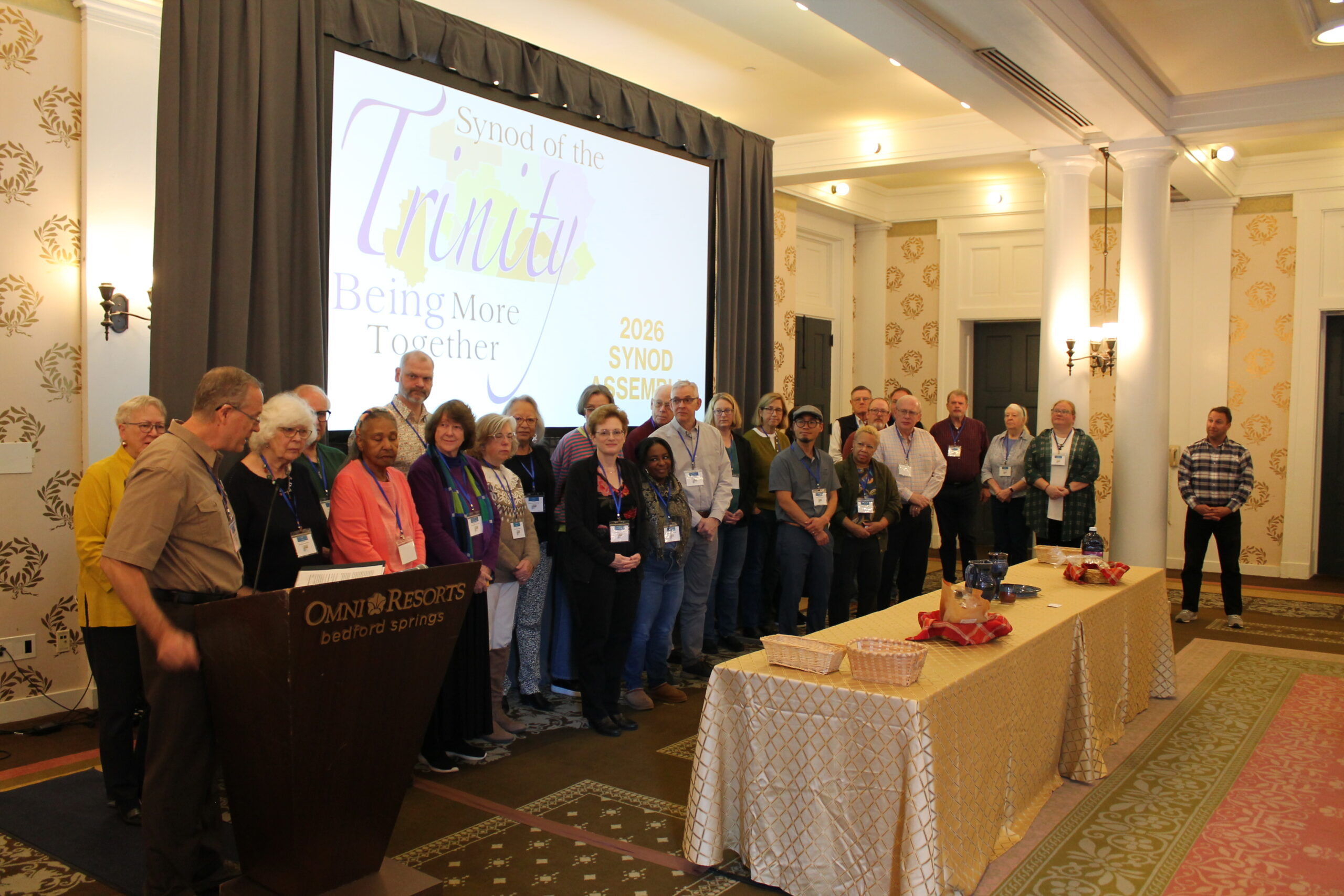
Synod commissioners gather at the October Synod Assembly.