
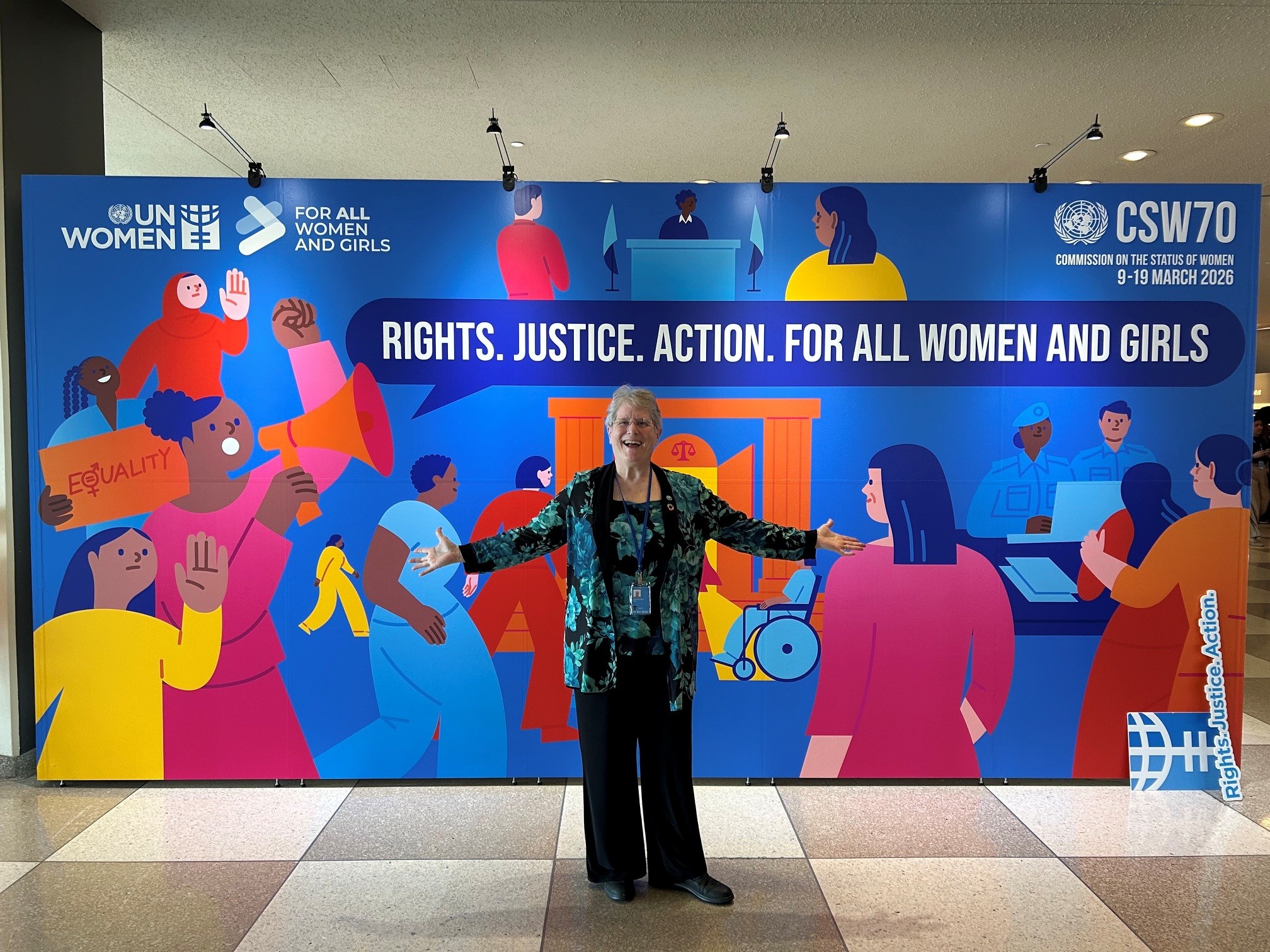
Bettie Stammerjohn stands outside a mural at the United Nations during the 70th Commission on the Status of Women, which was held in New York City in March.
Bettie Stammerjohn has experienced sex discrimination. Working as an executive director for a foundation in western Pennsylvania, upon leaving the agency after a dozen years of service she was replaced by a man who was given a higher salary on day 1 than she received in year 12. Prior to that, working as a planner in fundraising, for eight years Bettie received a significantly lower wage than the man she had replaced despite having more education and starting with the same experience as her predecessor.
It’s an all-too-common story where a person’s sex – not knowledge or proficiency of the job – determine the pay scale of the employee. Add in things like harassment and sexual abuse, and the workplace can be an ugly place for women on a daily basis.
These were some of the topics discussed during a 10-day period in March at the United Nation’s 70th Commission on the Status of Women (CSW), which was held in New York City. The annual international gathering was attended by more than 5,000 people, including Bettie, who resides in Washington Presbytery and went as a delegate from the Presbyterian Women of the Presbyterian Church (U.S.A.).
“We think we’re doing really great here in the U.S.,” Bettie said, referring to the treatment of women in America. “We still have our issues. But around the world there are still areas where women have little to no rights. And no country has achieved 100 percent full gender equality.”
Bettie, who is on the Administrative Team for the Synod of the Trinity’s PW working under the umbrella of “Leadership, Resources and Communications,” was in New York for eight of the conference’s 10 days, taking in workshops and listening to speakers. She was among 35 PW delegates from the denomination, which also brought 35 others to the gathering. Suzanne Herger, from the Presbytery of Philadelphia who is in charge of “Mission” at the Synod PW level, also attended as an observer.
“Beginning in 2018, PW has been able to have its own delegation to CSW,” Bettie explained. “The Presbyterian Church (U.S.A.) has always had a delegation.”
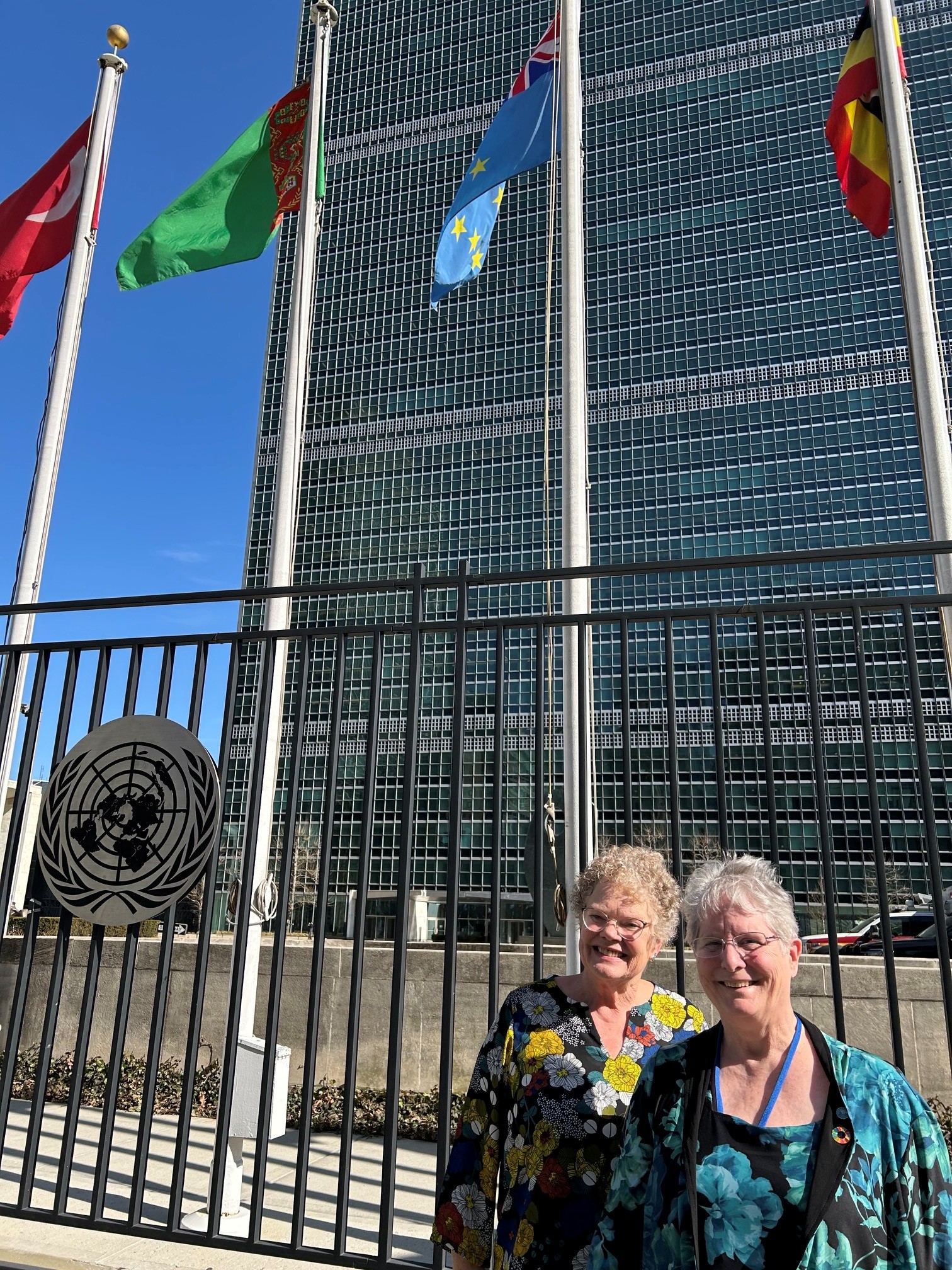
Bettie Stammerjohn (right) was joined at the UN’s women’s rights conference by Suzanne Herger.
Bettie applied to be a PW delegate and was granted that opportunity, one that she will continue to look back on fondly. Being able to listen to and take part in conversations about equality has left a lasting impression on her.
“Gender equality is a lot about respect for women and ensuring that women have the same opportunities for the same experience,” Bettie said. “It’s not just work experience but it’s health, it’s access to justice through legal systems and laws, medical care and retirement care. There are just so many different aspects to this equality.
“Women, still, in the United States make one-third less than men for the same job with the same experience. I’ve experienced that. I’ve been paid less for doing the same job that a man did before me with the same experience. And once I’m paid less, that means now I have less going into retirement. The inequalities build on each other and then make it difficult for women to be sustainable even as they grow older.
Bettie continued, “Women and girls in our country are still likely to be victims of sexual assault, trafficking, abuse and harassment, whether it’s in the home or on the job. Being accepted as a female leader, we still make a lot of jokes about that on social media. Particularly when there’s a strong woman leader, you get called names that imply that you are too much. But a man who would undertake those same activities to push for the right legislation, the right activities are called leaders and go-getters.”
Bettie first heard about CSW in 2024 while attending the PCUSA’s national PW conference. In learning about CSW, Bettie discovered that in the late 1970s, the UN passed the “Convention on the Elimination of all forms of Discrimination Against Women” (CEDAW) treaty. But despite President Jimmy Carter signing CEDAW, it didn’t pass through the Senate and remains dormant.
“The U.S. at the time was one of only a few countries to not ratify,” Bettie said. “It is the only industrialized nation to not ratify CEDAW. That just hits you between the eyes that this country is so great and so good but will not take a step to say we want to end discrimination against women in all forms.”
Overcoming these obstacles for women not only in the U.S. but around the world is the focus of the UN’s Commission on the Status of Women gathering. There, Bettie participated in daily morning worship with others from the denomination before heading off to different workshops and seminars.
“They often shared information about things that they have done over the past year or years,” Bettie explained. “I attended one that was done by the Nordic states. There was also collaboration between member states to address issues of discrimination.”
Parallel events were also held in New York on the same subject of women’s rights oppositive those of the UN, giving attendees many options for things to attend. One Bettie remembered dealt with violence and structural barriers targeted at child-bearing aged women.
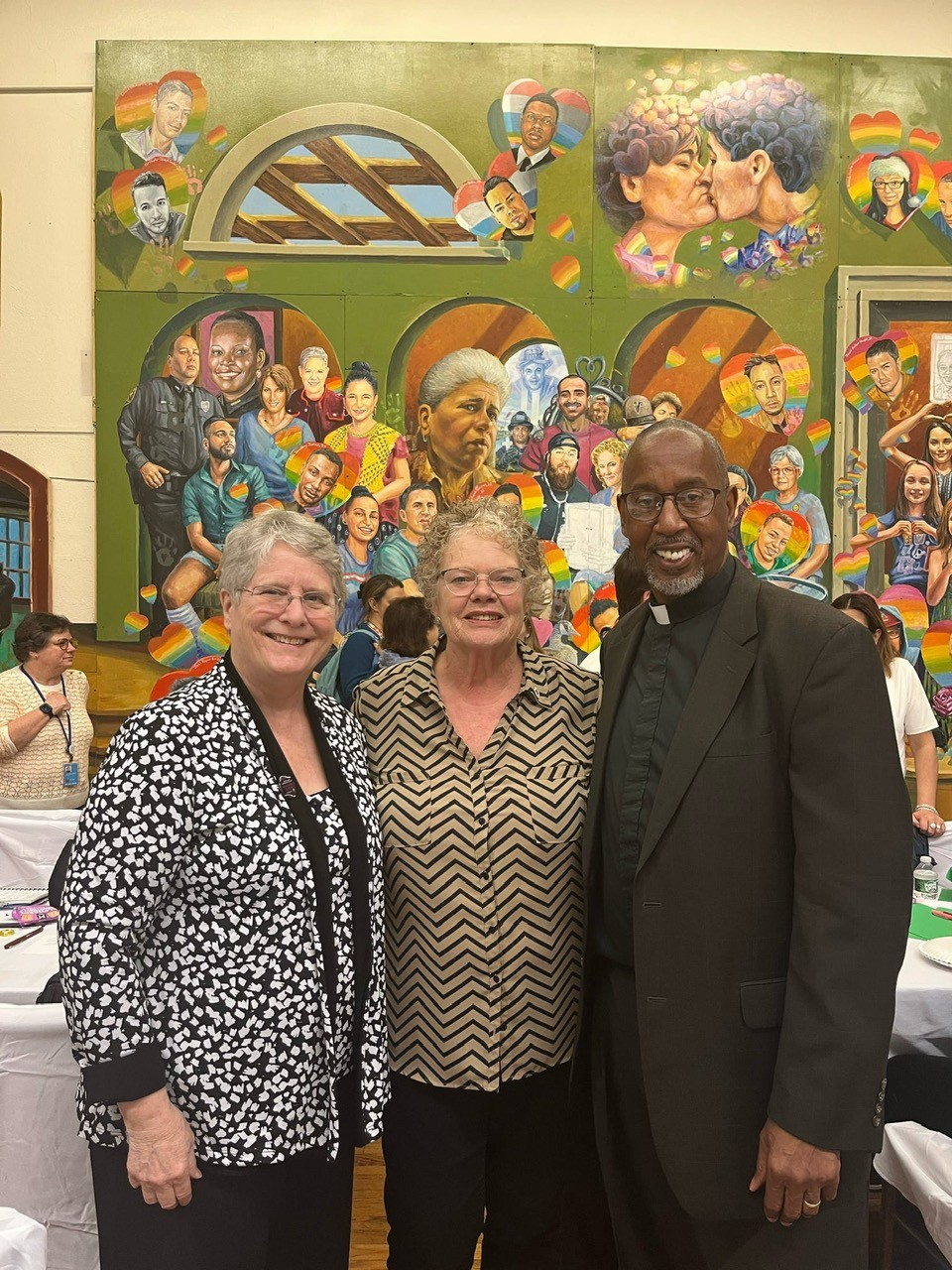
Bettie Stammerjohn and Suzanne Herger stand with the Rev. Jimmie Hawkins, from the PC(USA) Office of Public Witness and Director of Presbyterian Ministry, at the UN.
“A woman asked, ‘What about older women?’” Bettie recalled. “Because older women often get left out but there’s still violence against older women, there’s still discrimination against older women. It began into a discussion of how do we begin to address those issues?
“There was a recognition that this is an issue. How can we bring together young women and older women to work together? It wasn’t just sitting there listening to problems or progress, it began a discussion of how can we make a difference for next year? It was really awesome to see that collaboration, and that’s what it’s about.”
One afternoon at the conference, Bettie had lunch with a woman from the Netherlands. The conversation they had is something Bettie continues to remember and will help her as she continues this journey of advocating for equality.
“She looked at me and she said, ‘You know, you don’t have to be somebody important to make a difference,’” the woman said. “‘You don’t have to be somebody big. Sometimes all it takes is just a question to get other people to think about what needs to happen or what they can do.’ Probably more than anything else that is one of the things that has stuck with me because so often we think, ‘What can I do as Bettie Stammerjohn? I’m just a person.’”
Bettie gave a report on her experiences at a Washington Presbytery meeting and will continue to seek avenues where she can explain what she heard and what next steps should be taken to advance women’s rights.
“What I want to share is how important this topic is,” she said. “So often we as women in the United States, we have so much privilege. There are those hidden stories of discrimination, of barriers, of women being told they are less that just is not true. I want our Presbyterian Women to recognize that there are those issues out there. And since we’re supporting women, how can we do that and do it together?”
Bettie knows it only takes one small spark to create a fire. She hopes that the opportunity she was given in New York in March to be surrounded by so many women’s rights conversations will give her fuel to share those same thoughts and ideas to those in her region.
“If we don’t stand up and stand together, then it’s only going to get worse,” Bettie said. “We’re not going to achieve what we want for our daughters, granddaughters, nieces and friends for the future.
“God put us together on this Earth as male and female, and he loves us as women. This is where he’s calling me now – to be a voice for others.”